Table of Contents
ALSO READ :-Black Friday Iphone Deals – 2026 Guide / Best Picks
iPhone 18 Pro Max Price: What to Know, Watch and Buy in 2026
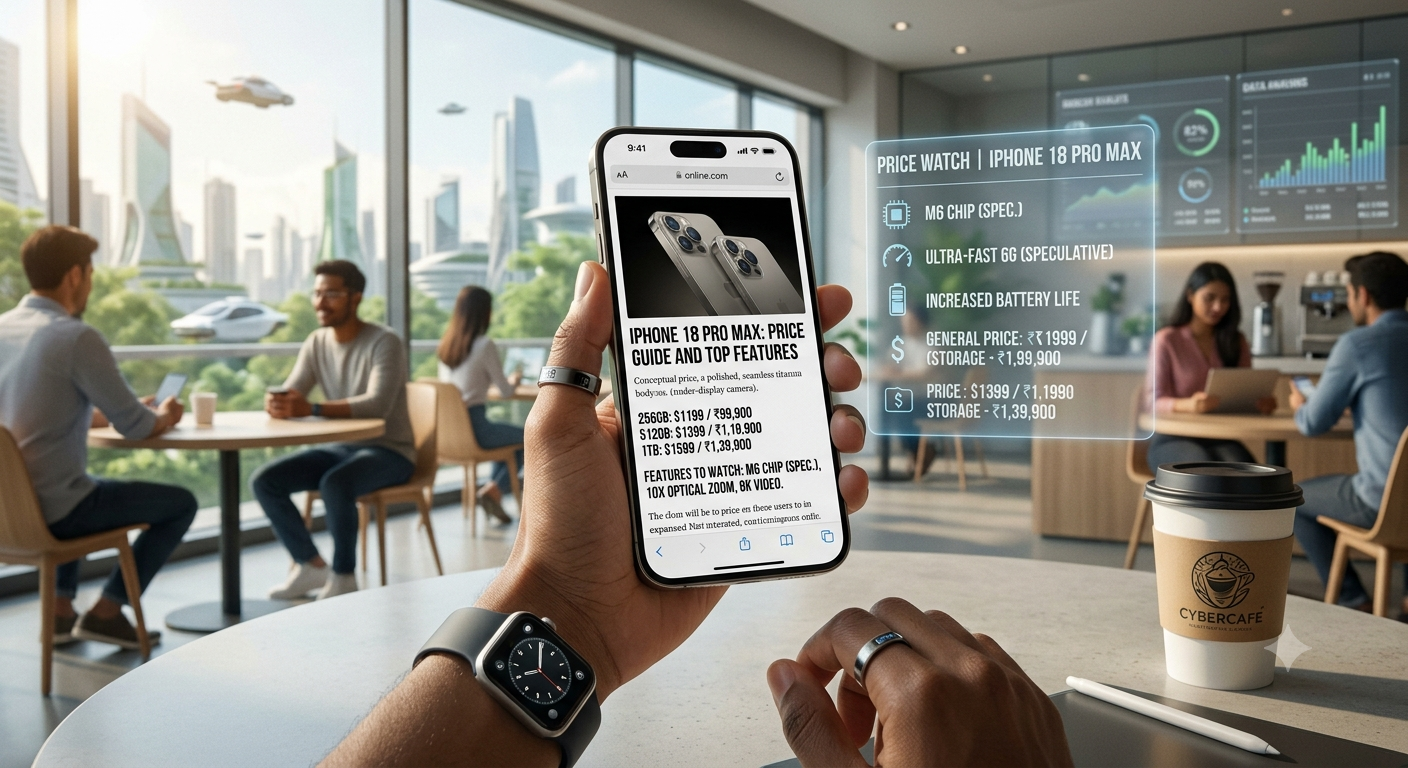
If you only came here for one number, here it is: the iPhone 18 Pro Max starts at $1,299 in the US for 256GB, and it goes up from there depending on storage, financing and whether you buy from Apple or a carrier. But the real cost of this phone, the number that actually lands on your bank statement, depends on a handful of decisions most buyers rush through. This guide slows that down.
We’ll walk through every storage tier and its real price, what carriers are actually offering right now, how Apple’s financing and trade-in programs work, how this year’s price compares to the last several generations, what independent trade-in sites are finding about Apple’s own trade-in offers, and when it genuinely makes sense to wait rather than buy today. If you landed here from our <a href=”#”>iPhone 18 Pro Max announcement and review</a>, this is the deep-dive on the money side of that decision. If you’re specifically watching for holiday pricing, our <a href=”#”>iPhone 18 Pro Black Friday carrier deals guide</a> covers that in more detail.
Last updated September 22, 2026. Prices, trade-in values and carrier offers change frequently — we revisit this page regularly and note the last update at the top.
iPhone 18 Pro Max Price by Storage: The Full Breakdown
Apple sells the iPhone 18 Pro Max in four storage tiers. This is the first year a 2TB option exists for the Pro Max, which matters if you shoot a lot of ProRes video or keep large offline media libraries.
| Storage | Price |
|---|---|
| 256GB | $1,299 |
| 512GB | $1,499 |
| 1TB | $1,699 |
| 2TB | $1,899 |
A few practical notes on choosing a tier:
- 256GB is enough for most people who rely on iCloud and don’t shoot extensively in ProRes or 4K at high frame rates.
- 512GB is the realistic sweet spot if you take a lot of photos and video and don’t want to manage storage constantly.
- 1TB and 2TB mostly make sense for working photographers, videographers, or anyone who keeps a large downloaded media or game library on-device.
Each storage jump costs exactly $200, which has been Apple’s standard spacing for several generations now. There’s no discount for buying a bigger tier upfront; it’s a flat linear markup.
iPhone 18 Pro Max Price vs iPhone 18 Pro: Is the Max Worth $100 More?
The smaller iPhone 18 Pro starts at $1,199, exactly $100 less than the Pro Max at every matching storage tier. Both phones share the same chip, the same camera system, and the same software features. The differences are the screen size (6.3 inches versus 6.9 inches) and battery life, where the Pro Max holds a meaningful edge, Apple’s biggest battery-life jump on any iPhone to date.
If your hands are smaller or you prefer a more pocketable phone, the standard Pro saves you $100 at every storage level with no feature compromise beyond screen size and battery. If all-day, every-day battery life matters more to you than pocketability, the extra $100 for the Pro Max is one of the more justifiable upcharges Apple has offered in recent years.
iPhone 18 Pro Max Price vs iPhone 17 Pro Max: The Price Hike, Explained
If you’re coming from last year’s phone, you’ve probably already noticed: the iPhone 18 Pro Max costs $100 more than the iPhone 17 Pro Max did at launch, which started at $1,199.
| Generation | Starting price (256GB) | Change |
|---|---|---|
| iPhone 16 Pro Max | $1,199 | — |
| iPhone 17 Pro Max | $1,199 | No change |
| iPhone 18 Pro Max | $1,299 | +$100 |
What makes this increase unusual is that it wasn’t limited to the new phones. On September 9, 2026, the same day it announced the iPhone 18 Pro lineup, Apple also raised prices across its existing catalog. The standard iPhone 17 moved from $799 to $899, and the iPhone Air moved from $999 to $1,099, both $100 increases on phones that had already been on sale for a year. That’s a meaningful signal: this wasn’t a one-off premium tied to new iPhone 18 Pro Max features, it was a broader, lineup-wide price adjustment.
For context on why that might be happening, industry analysts have pointed to rising component costs, including memory chip shortages driven by surging AI server demand, as a contributing factor across the consumer electronics industry this year, not just at Apple.
Iphone 18 Pro Max Price: What to Know, Watch and Buy in 2026
How Carriers Are Pricing the iPhone 18 Pro Max Right Now
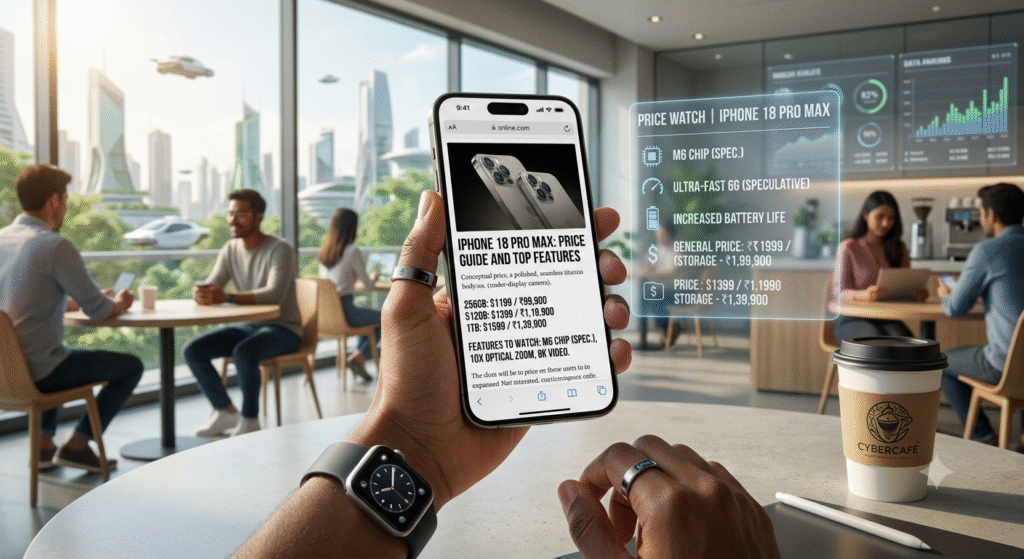
Apple’s sticker price is only the starting point. Almost nobody pays full price for a flagship iPhone, and the real action is in carrier trade-in and bill-credit programs. Here’s where things stand today.
Trade-In Credit Maximums Went Up This Year
According to Bank of America analyst Michael Funk’s review of carrier promotions, the maximum trade-in credit for the iPhone 18 Pro Max rose to $1,200, up from $1,100 for the iPhone 17 Pro Max last year and $1,000 for the iPhone 16 Pro Max the year before that. The same $1,200 maximum applies to the smaller iPhone 18 Pro as well.
That’s a real increase in carrier generosity, and it’s worth understanding why: carriers are using bigger trade-in incentives to offset the higher sticker price and keep upgrade momentum going, rather than letting customers balk at paying $100 more upfront.
What a Fully Discounted Upgrade Actually Costs
Running the numbers on a typical case, trading in a phone that qualifies for the maximum credit, Funk calculated the real upfront cost of a new iPhone 18 Pro Max lands around $400 to $405 after the trade-in credit is applied. That figure includes an activation fee (typically $35 to $40) and tax calculated on the device’s full retail price, since trade-in credits are usually applied as bill credits over time rather than reducing the taxable sale price. Adding AppleCare+ adds roughly $150 on top of that.
The equivalent calculation for the smaller iPhone 18 Pro comes out to about $291 to $296 upfront under the same scenario.
Iphone 18 Pro Max Price: What to Know, Watch and Buy in 2026
AT&T’s Published Trade-In Tiers
AT&T’s current published offer, as of September 18, 2026, breaks down by the condition and value of your trade-in device:
- Up to $1,200 ($33.34/month over 36 months) when trading in an eligible iPhone 14 or newer, in any condition, or another smartphone valued at $180 or higher, on AT&T Premium 2.0, Elite 2.0, or qualifying legacy unlimited plans.
- Up to $930 ($25.84/month over 36 months) for a trade-in valued between $130 and $179.99, on a broader set of qualifying plans.
- Up to $350 ($9.73/month over 36 months) for a trade-in valued between $35 and $129.99.
The pattern that matters here: the biggest discount requires both a newer trade-in phone (iPhone 14 or later) and AT&T’s top-tier plans. If you’re on an older phone or a cheaper plan, your real discount shrinks significantly, even though the “$1,200 off” headline is what gets advertised.
Verizon and T-Mobile
Verizon has historically offered the standard iPhone Pro at no upfront cost on an eligible plan, with the Pro Max sometimes requiring a modest additional payment, so the terms are worth reading carefully before committing to a new line. T-Mobile is similarly expected to offer the iPhone 18 Pro free on a qualifying plan with trade-in, alongside standard lineup-wide discounts of up to $700 and occasional buy-one-get-one promotions when adding a second line.
For a full breakdown of current and predicted carrier deals through the holiday season, see our <a href=”#”>iPhone 18 Pro Black Friday carrier deals guide</a>.
Apple’s Own Trade-In Values: Why You Might Be Leaving Money on the Table
Here’s something a lot of buyers miss: Apple’s own trade-in program is rarely the best offer available, even if it’s the most convenient.
Independent trade-in comparison site SellCell ran the numbers across the 15 most commonly traded-in iPhone models and found that Apple’s trade-in offer came in lower than the best available quote on every single model they tested, with the gap reaching as much as $170 against the next-best institutional buyer, and up to $472 lower than the best individual buyer offers.
The starkest example: for an iPhone 16 Pro Max, Apple’s trade-in offer was $610, compared with a top available quote of $780 through SellCell’s marketplace, a $170 difference on a single device.
What this means practically: if your goal is purely to maximize the dollar amount for your old phone, it’s worth checking at least one third-party trade-in marketplace or a carrier’s promotional trade-in credit (which is often higher than Apple’s own, though usually paid out as bill credits rather than cash) before defaulting to Apple’s trade-in page. If your priority is speed and simplicity, especially if you’re trading in at the same time as your purchase, Apple’s in-store process remains the most frictionless option, just not the most lucrative one.
There’s No Resale Data Yet for the iPhone 18 Pro Max Itself
One important caveat: Apple has not published a trade-in value for the iPhone 18 Pro or iPhone 18 Pro Max themselves, since trade-in values are based on resale demand for a device people already own, and this one only shipped on September 18. That figure won’t materialize until the next upgrade cycle, likely around this time next year.
Apple’s iPhone Upgrade Program and Financing Options
If you’d rather not deal with carrier contracts, Apple offers its own financing path. The iPhone Upgrade Program lets you pay for the phone over 24 monthly installments while financing through Apple, with the built-in option to trade in and upgrade to a new iPhone every 12 months, once you’ve made at least 12 payments. Apple has also introduced a leasing-style option this cycle aimed at buyers who want a lower monthly payment and don’t mind not owning the device outright at the end of the term.
For the iPhone 18 Pro Max, financing through Apple directly (not a carrier) typically breaks the $1,299 price into monthly payments without requiring a carrier plan commitment, which keeps the phone unlocked and carrier-flexible, a meaningful advantage if you travel internationally or like to switch carriers to chase deals.
When Should You Buy: Now, or Wait?
This is the question that actually matters more than any individual price point. Here’s a realistic framework.
Reasons to Buy Now
- You have a strong trade-in candidate. Trade-in values generally decline over time as a device ages and newer models arrive, so if you’re sitting on an iPhone 14 or newer in good condition, the trade-in math is unlikely to improve by waiting.
- Your current phone is failing. Battery degradation, cracked screens, or performance issues don’t wait for a sale.
- A current carrier promotion already matches what you’d expect from a seasonal sale. As covered above, the $1,200 maximum trade-in credits already in place today are competitive with what carriers have historically offered during Black Friday.
Reasons to Wait
- You don’t have an urgent need. The iPhone 18 Pro Max isn’t going anywhere, and outright price cuts (as opposed to trade-in promotions) are historically rare this soon after a September launch.
- You’re not switching carriers and don’t have a trade-in. The largest discounts require both a trade-in and, often, a new or switched line. Without either, you’re likely to pay close to full price regardless of timing.
- You want to see Black Friday pricing before committing. Carriers typically roll out their most aggressive promotions in the two to three weeks before Black Friday (November 27, 2026 this year). If you can hold out, comparing confirmed Black Friday offers against today’s baseline is the lowest-risk approach.
iPhone 18 Pro Max Price: US vs Historical Launch Prices
Zooming out, it’s worth seeing where this year’s price sits in the longer arc of iPhone Pro Max pricing. The Pro Max tier has held at $1,199 for three consecutive generations (iPhone 16 Pro Max, iPhone 17 Pro Max) before this year’s jump to $1,299. That three-year price freeze, followed by a $100 increase that also touched the rest of the lineup, suggests this is less about the Pro Max specifically and more about broader cost pressures across Apple’s entire catalog in 2026.
How Much Should You Really Budget? A Realistic Total Cost Example
Sticker prices rarely reflect what you actually spend. Here’s a realistic budget walk-through for a typical buyer trading in an eligible phone and adding standard extras:
| Line item | Approximate cost |
|---|---|
| iPhone 18 Pro Max, 256GB | $1,299 |
| Trade-in credit (eligible iPhone 14 or newer, applied over time) | -$1,200 (as bill credits, not upfront) |
| Activation fee | $35-$40 |
| Sales tax (on full retail price in most states) | Varies by state, often $80-$130 |
| AppleCare+ (optional) | +$150-$300 depending on term |
| Case (see our <a href=”#”>best iPhone 18 Pro Max cases guide</a>) | $15-$70 |
| Screen protector | $15-$25 |
The key thing this table makes clear: even with a maximum trade-in credit, your upfront, out-of-pocket cost on day one is closer to $400-$500 once tax, activation fees and basic accessories are factored in, even though the credited total brings your effective price down close to zero over the life of the contract. Don’t budget based on the “free with trade-in” headline alone.
Does the Color You Choose Affect the Price?
No. Burgundy, Glacier, Black and Silver are all priced identically at every storage tier. If you’re deciding between finishes, our <a href=”#”>full iPhone 18 Colors guide</a> breaks down what each one actually looks like and which tends to be hardest to find in stock, but price isn’t a factor in that decision.
iPhone 18 Pro Max Price FAQ
How much does the iPhone 18 Pro Max cost in the US?
It starts at $1,299 for 256GB, rising to $1,499 for 512GB, $1,699 for 1TB, and $1,899 for 2TB.
Why did the iPhone 18 Pro Max get more expensive this year?
Apple raised prices across much of its lineup on September 9, 2026, not just on the new Pro models. The standard iPhone 17 and iPhone Air also went up $100 that same day, suggesting broader cost pressures rather than a Pro Max-specific premium.
What’s the maximum trade-in credit for the iPhone 18 Pro Max?
Carrier trade-in maximums have risen to $1,200, up from $1,100 last year, according to Bank of America’s analysis of carrier promotions. The exact amount you get depends heavily on your trade-in device’s age, condition and your chosen plan.
Is Apple’s trade-in offer the best deal?
Not usually. Independent comparisons have found Apple’s trade-in quotes lower than third-party marketplace offers on every model tested, with gaps as large as $170 against institutional buyers and up to $472 against individual buyers. Carrier trade-in credits can also exceed Apple’s own, though they’re typically paid out as bill credits rather than cash.
What will my real out-of-pocket cost be with a trade-in?
Even with a maximum trade-in credit, expect to pay activation fees and tax upfront, which commonly brings day-one costs to roughly $400-$500 before the credited bill savings offset the rest over the following 24 to 36 months.
Should I buy now or wait for Black Friday?
If you already have a strong trade-in and need a phone now, today’s offers are close to what’s typically available during Black Friday. If you don’t have a trade-in or aren’t switching carriers, waiting to compare confirmed Black Friday pricing is the lower-risk move. See our <a href=”#”>Black Friday deals guide</a> for live updates as November approaches.
Does storage size affect the price difference between the Pro and Pro Max?
No. The $100 gap between the iPhone 18 Pro and Pro Max holds steady at every storage tier, from 256GB up to 2TB.
Bottom Line
The iPhone 18 Pro Max costs $1,299 to start, $100 more than last year, as part of a lineup-wide price increase rather than a Pro Max-specific hike. The sticker price, though, is rarely what anyone actually pays. With carrier trade-in credits now topping out at $1,200, most buyers with an eligible trade-in phone can realistically expect an out-of-pocket cost in the $400-$500 range once fees and tax are included, spread out through bill credits over two to three years. Whether buying now or waiting makes more sense comes down to one question: do you already have a strong trade-in and an urgent need, or can you afford to wait and compare confirmed holiday pricing before committing?
Prices, trade-in values and carrier terms are accurate as of September 22, 2026, and are subject to change without notice. This post may contain affiliate links; we may earn a commission at no extra cost to you, at no additional cost to you.